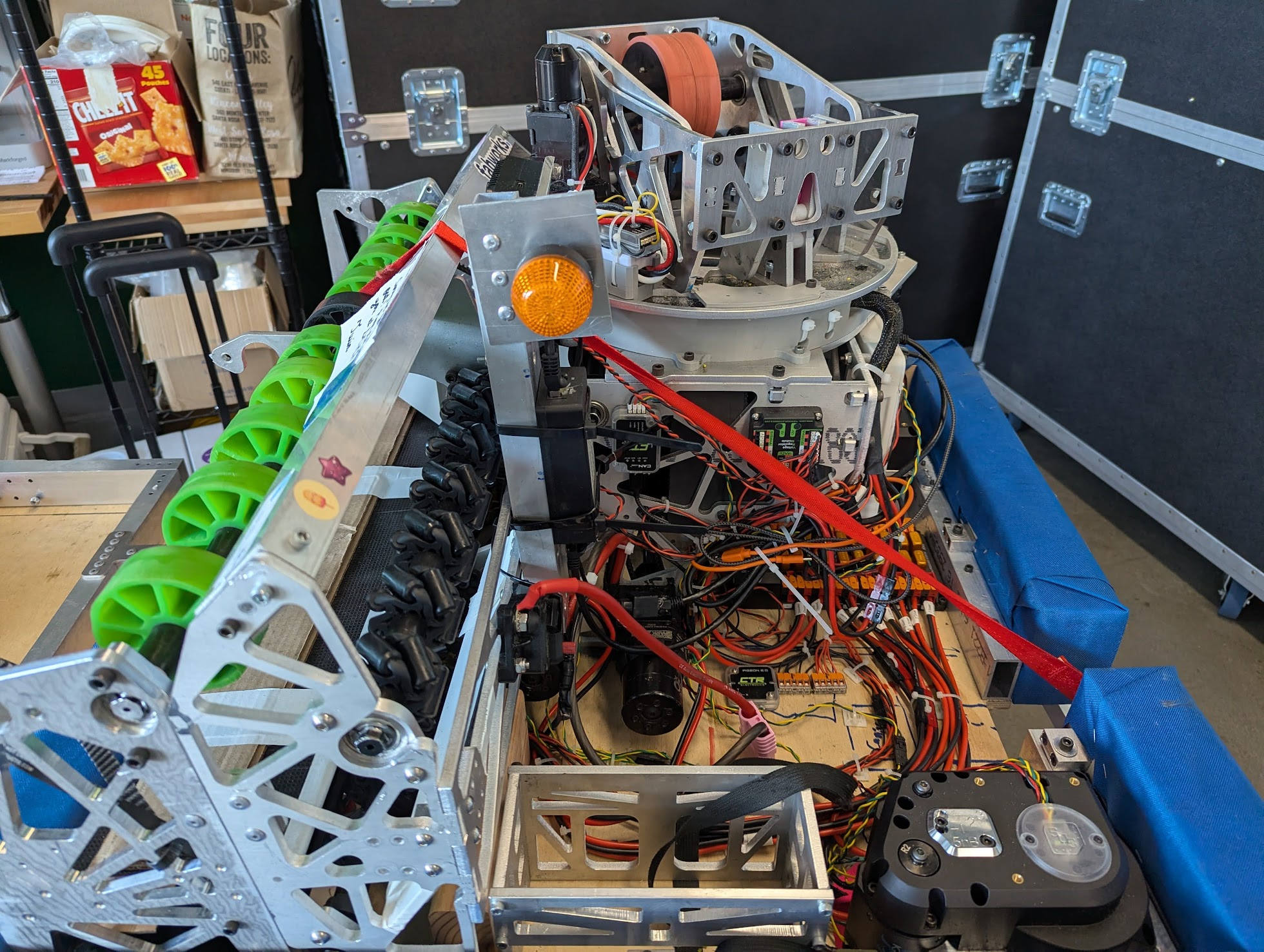
I was hired as a long term substitute teacher (maternity replacement) at Sonoma Academy this year, which led to me being hired to help coach their First Robotics team, Ellipse. I helped the team with making parts in their metal shop, testing the robot, and with design and fabrication of the team graphics. The team made it to the state finals, and their robot could essentially play a form of basketball autonomously.
This year’s robot.
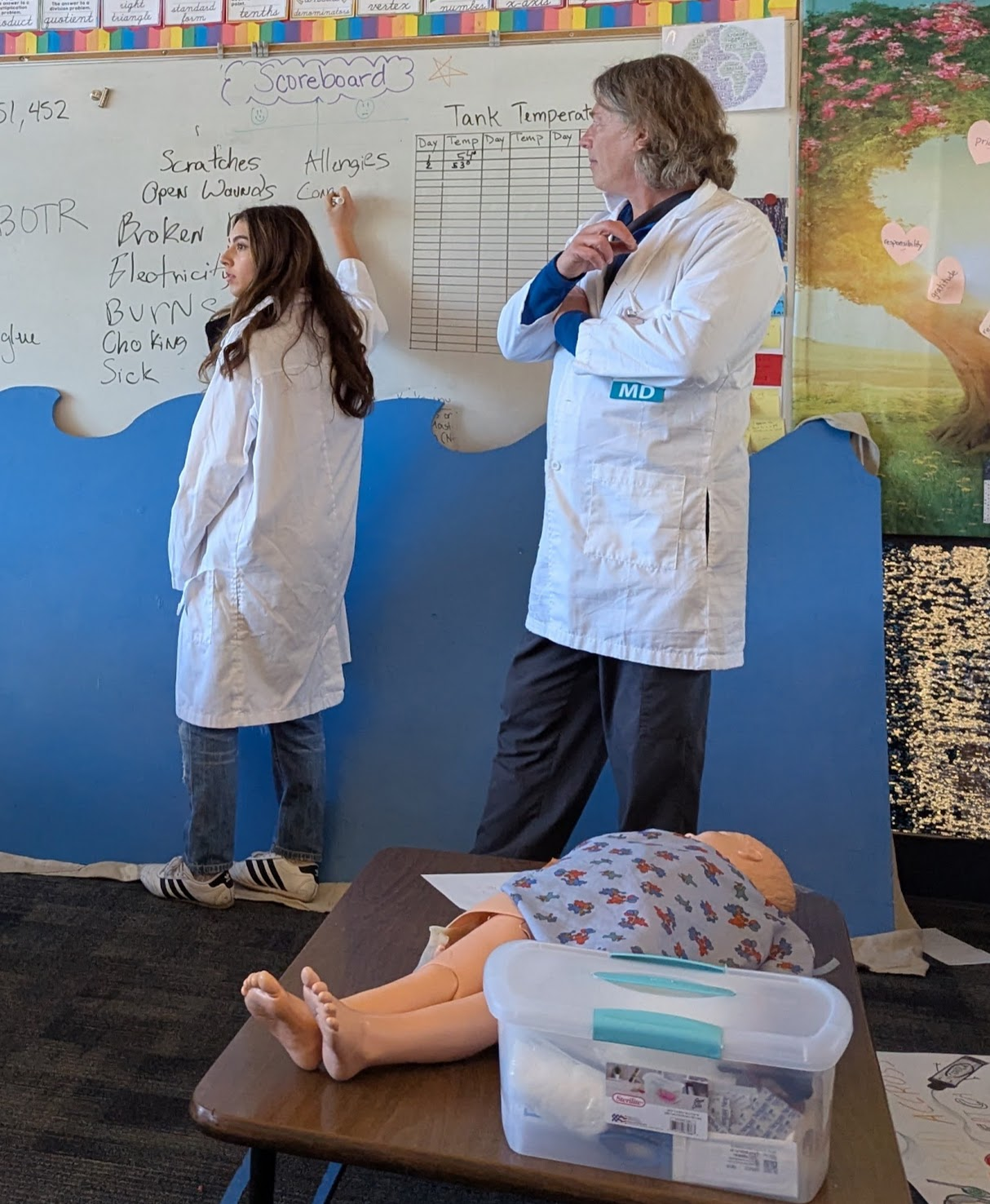
I got to know Dr. Craig Cohen, a Sutter ER doctor, while working with the robotics team. His daughter Francesca was the pit lead this year. They both came to Gravenstein Elementary to give interactive first aid presentations to my STEM classes.
Dr. Cohen and his daughter at Gravenstein.
The main class I was teaching was urban horticulture, where students worked in the new Sonoma Academy garden, growing vegetables for the cafeteria. I also got to sub for wood shop and biology classes.
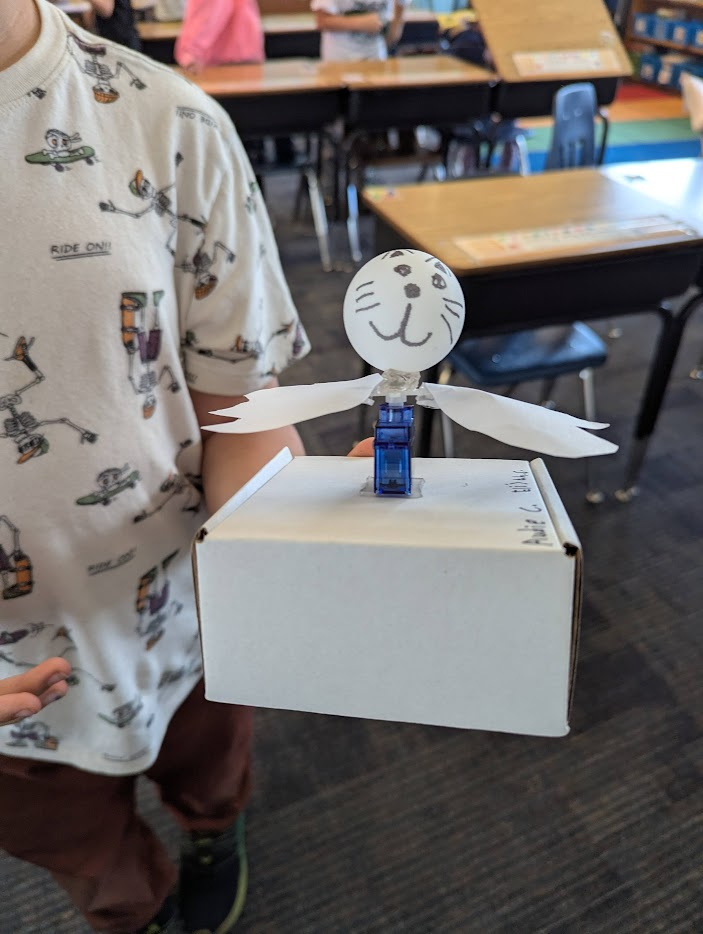
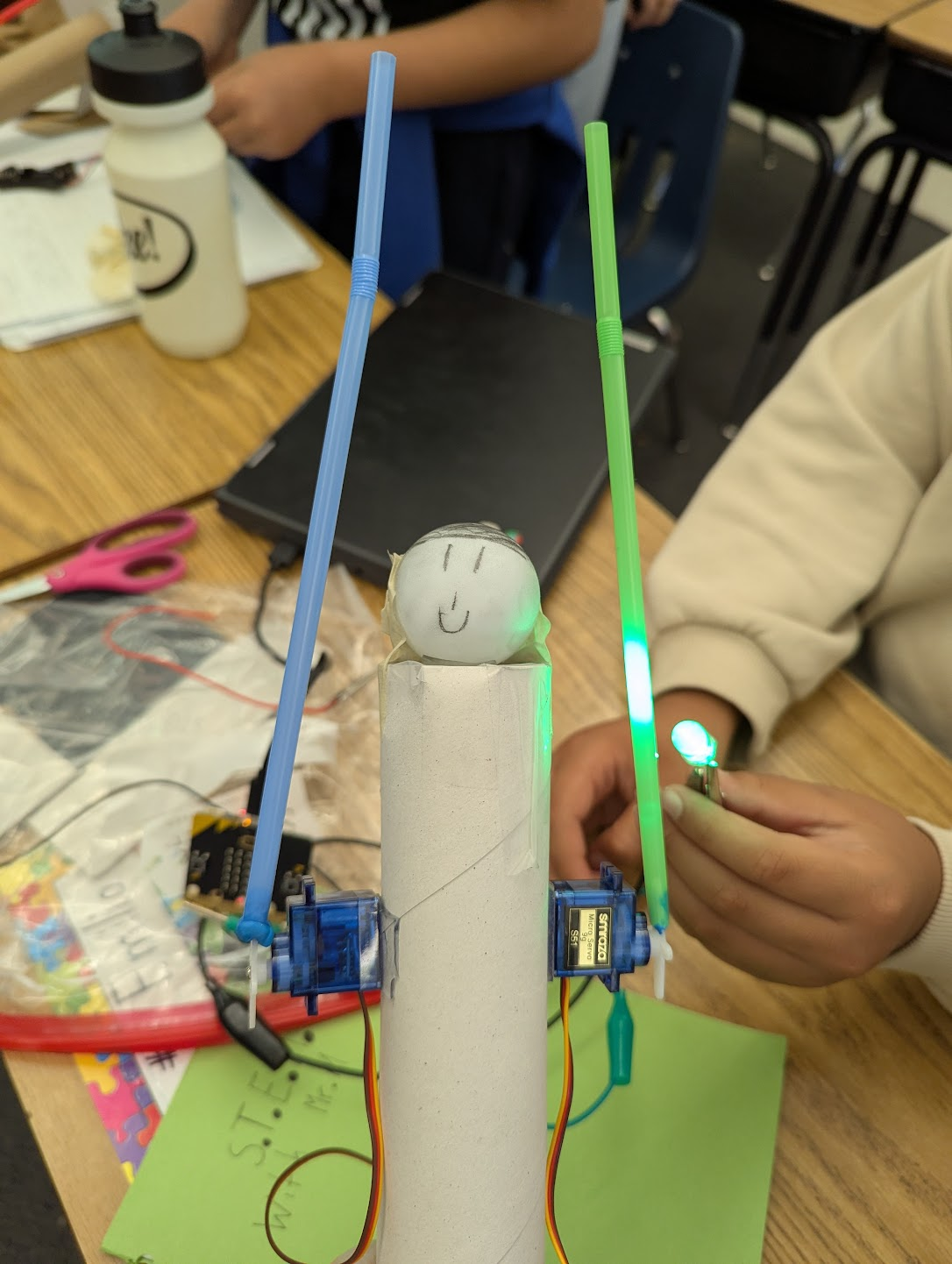
Gravenstein students have been designing and building simple robots using servo motors and LED’s controlled by Microbits. I recommend watching YouTube videos about how to program the servos and LED’s. It’s also possible to use a motor driver board to control DC motors to make fan cars and boats. See the Radio Control section of this site for tips on how to make RC versions of these. Here are the materials we are using in case you’d like to build some of these robots at home:
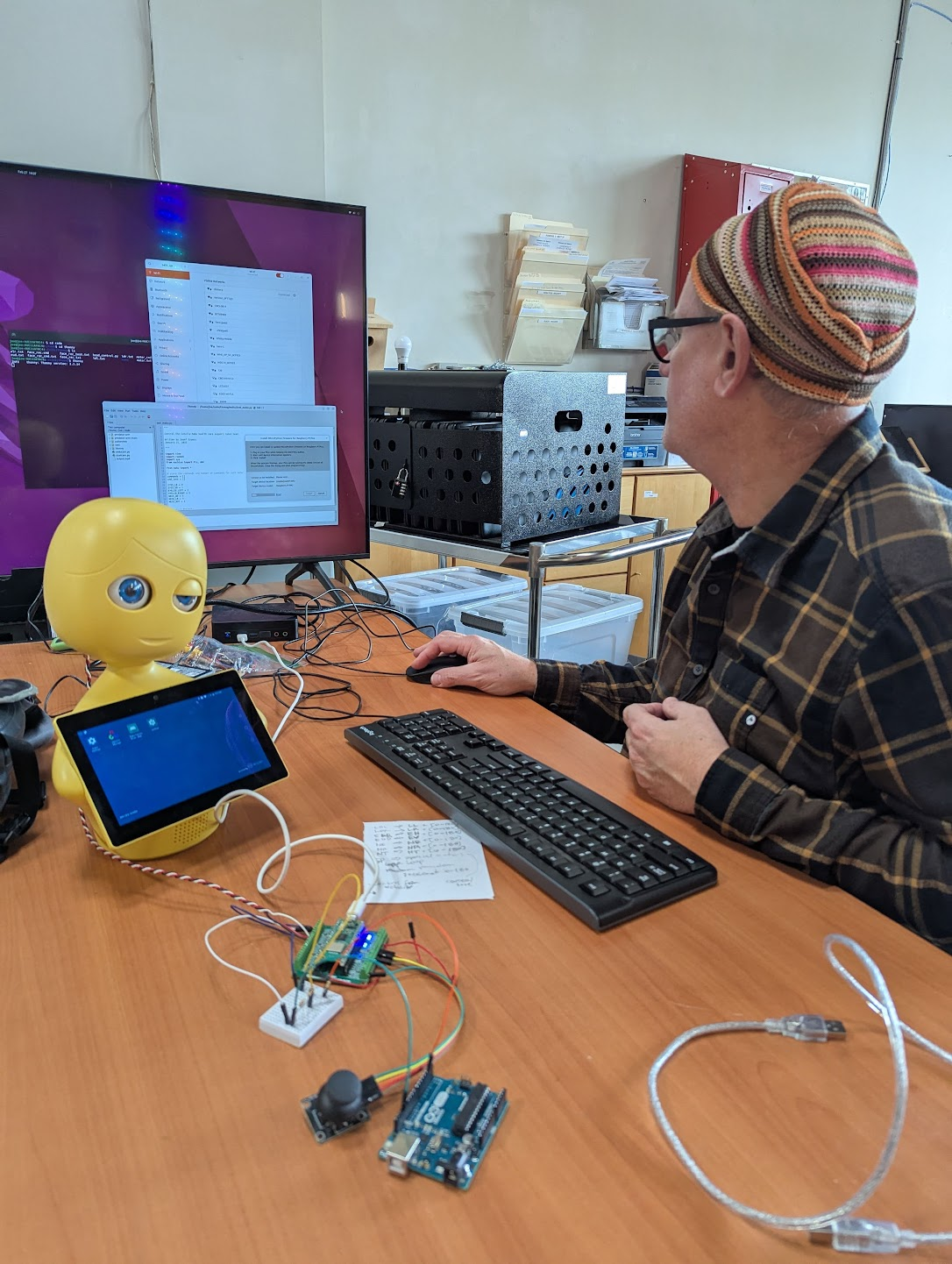
Joe Szuecs and I brought these health care assistance robots to Gravenstein to demonstrate how Joe was able to hack and control them using a Microbit and a joystick.A cat robot made by a pair of 2nd graders. Next they will add LED lights.This student is working on making their robot’s head light up, using Microbit code to power an LED controlled by buttons.
Gravenstein students are learning to code with BBC microbits this month. These powerful microprocessors can be used to send messages, make music, and build robots.
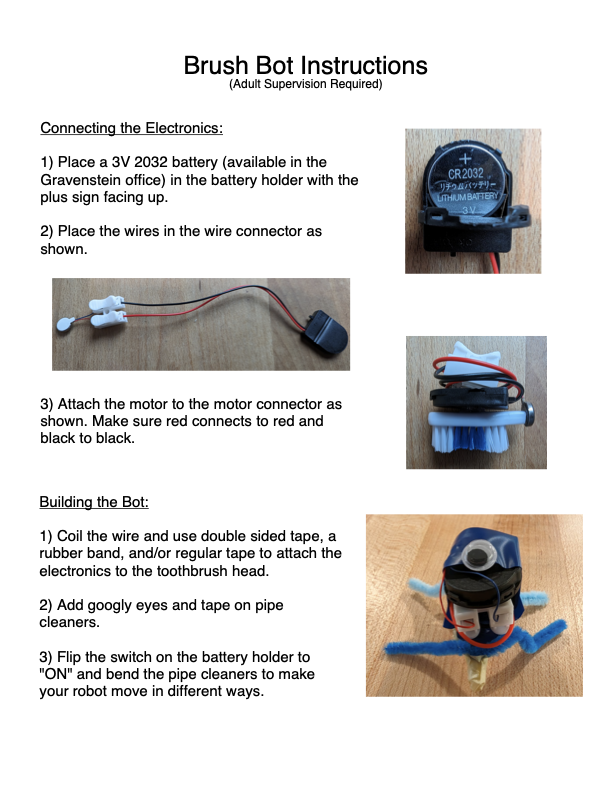
Gravenstein students in TK-2nd grade have been doing lots of fun experiments and engineering projects this fall (see summary below). This month they have been making robots out of toothbrushes.
1st and 2nd grade students will be taking home these brush bots in January, minus the battery, which you can buy on Amazon for around $1.50 (see link below).
Instructions for Brush Bot 2.0, although you can also build them without the connector and battery holder, just using tape to connect the wires to the battery directly.
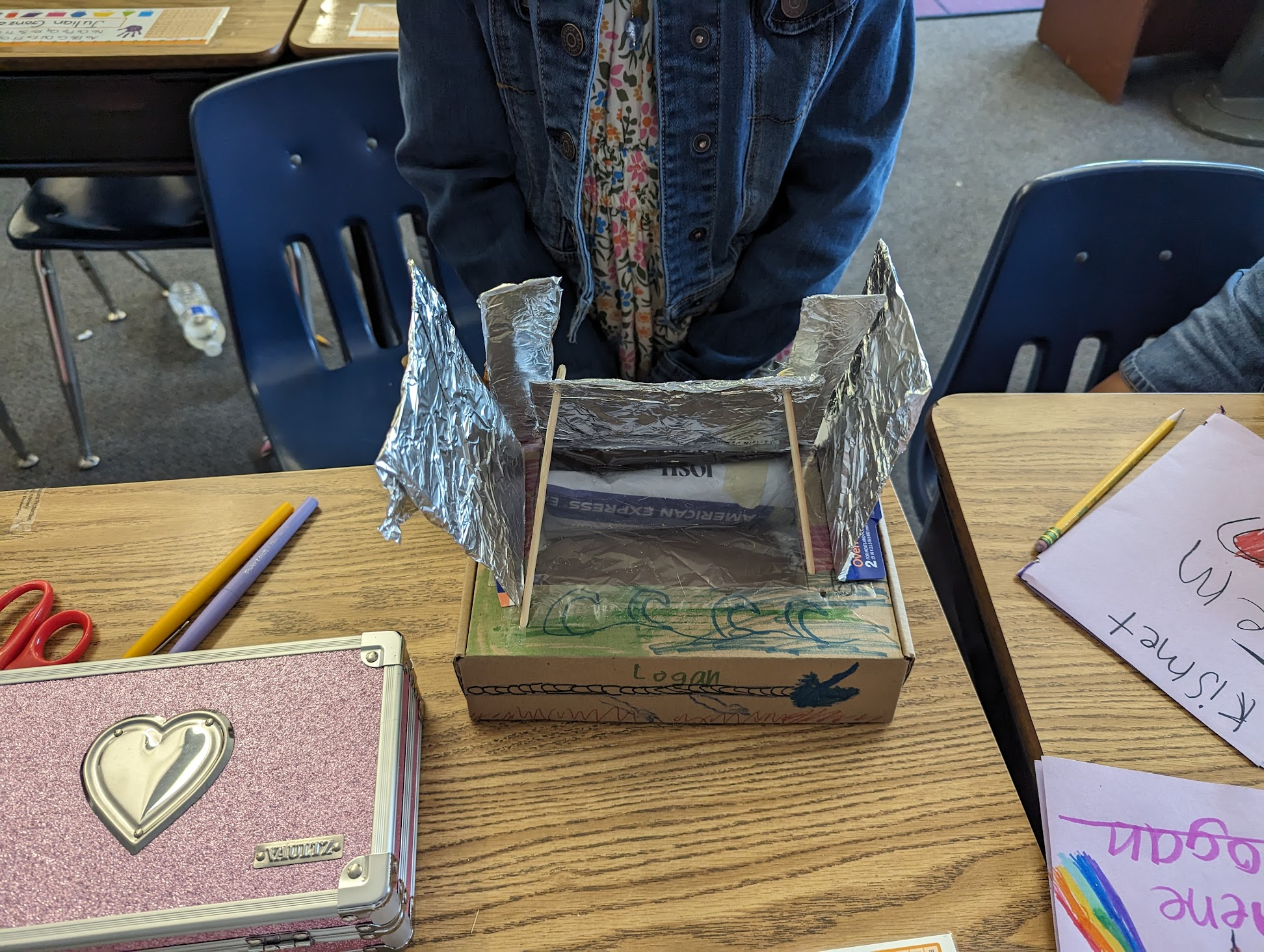
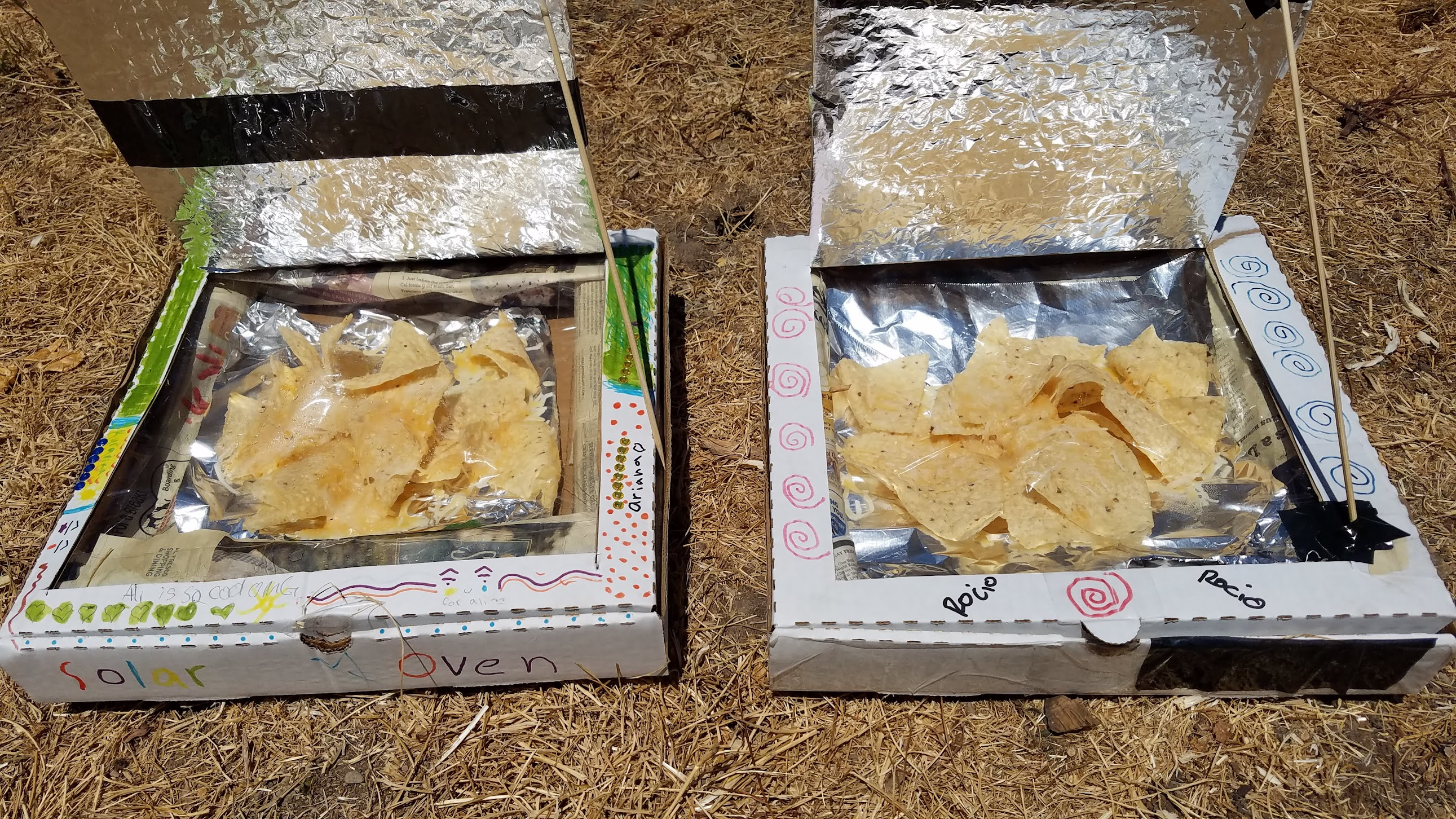
Gravenstein STEM Summary: 1st and 2nd graders made solar ovens with some very creative reflectors. Kindergartners made super long chains out of pipe cleaners, mixed up chemicals (non-toxic) in test tubes, and launched Alka-Seltzer rockets. The 1st and 2nd graders built rockets too. They started by making strawkets, then worked in teams to build cardboard rockets that launched with real rocket engines.
Our second summer camp, taught by engineers at the Chimera Makerspace, was a huge success. This year we added 3D printed rockets, smart solar ovens and laser robots to the list of projects campers completed. We’re gearing up for more camps next summer, which will be similar to this year, but with more robotics: BuildHackMake
We’ve been making slime at Gravenstein (where I’m known as Mr. M), and students are bringing a bag of slime home. We are just using washable school glue and cornstarch, sometimes with shaving cream and food dye added in. The recipe below includes Borax, which we aren’t using since it can be a skin irritant. If you want to make your slime thicker at home, you can try adding warm water, baking soda dissolved in warm water, or contact solution.
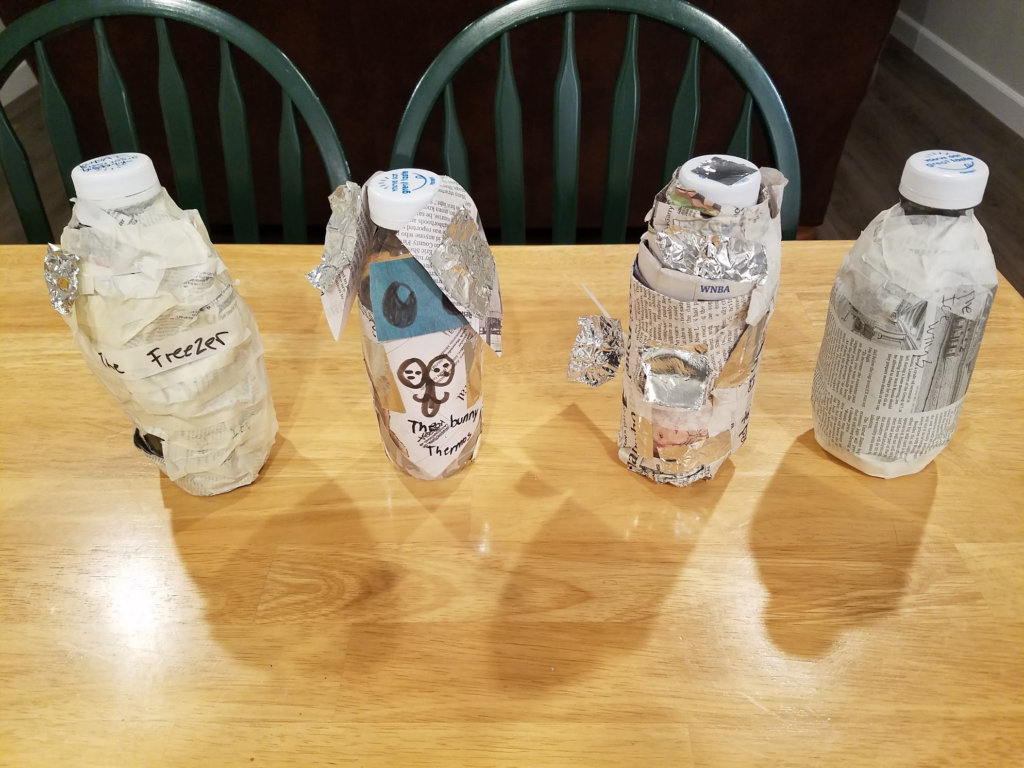
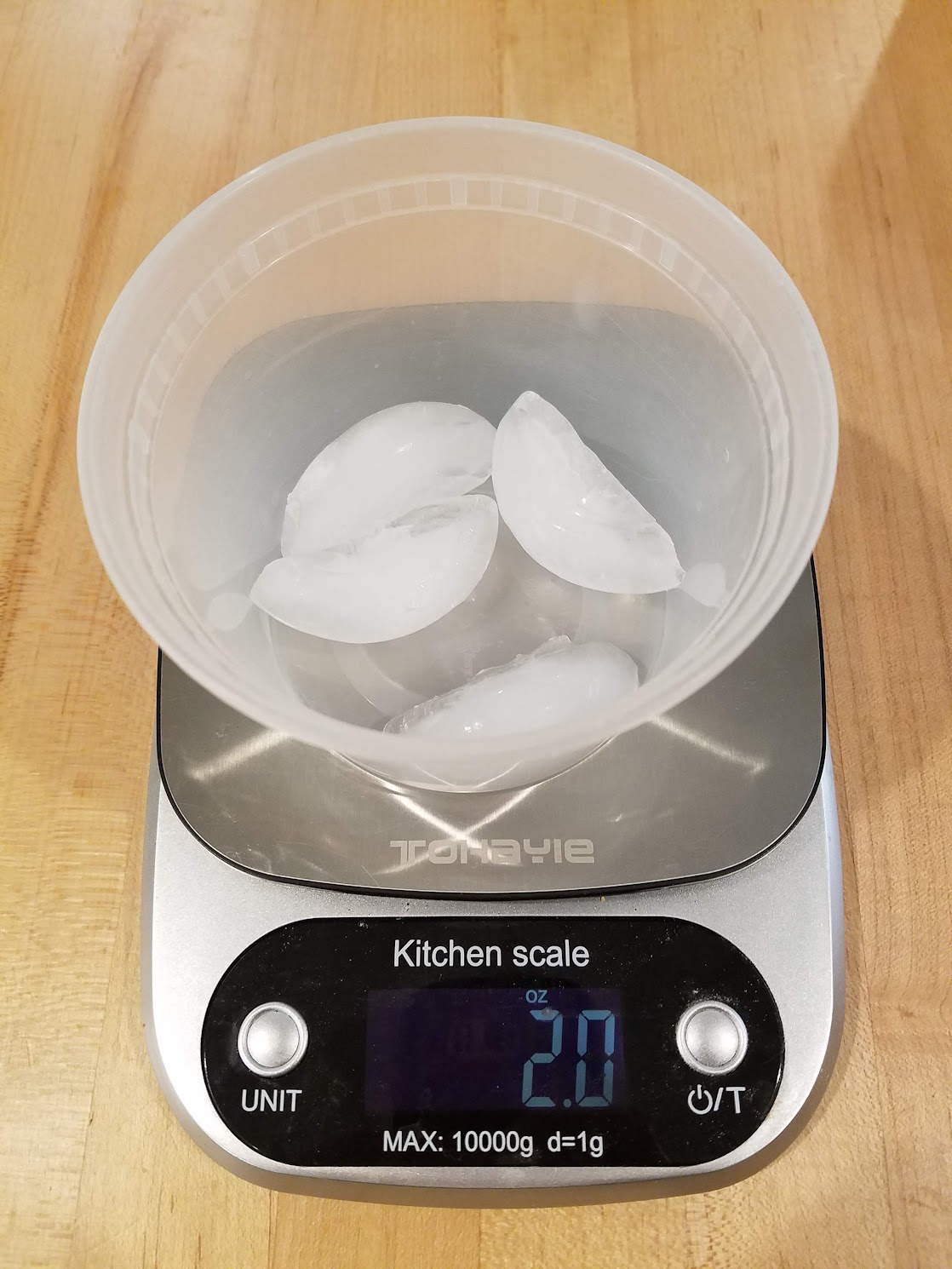
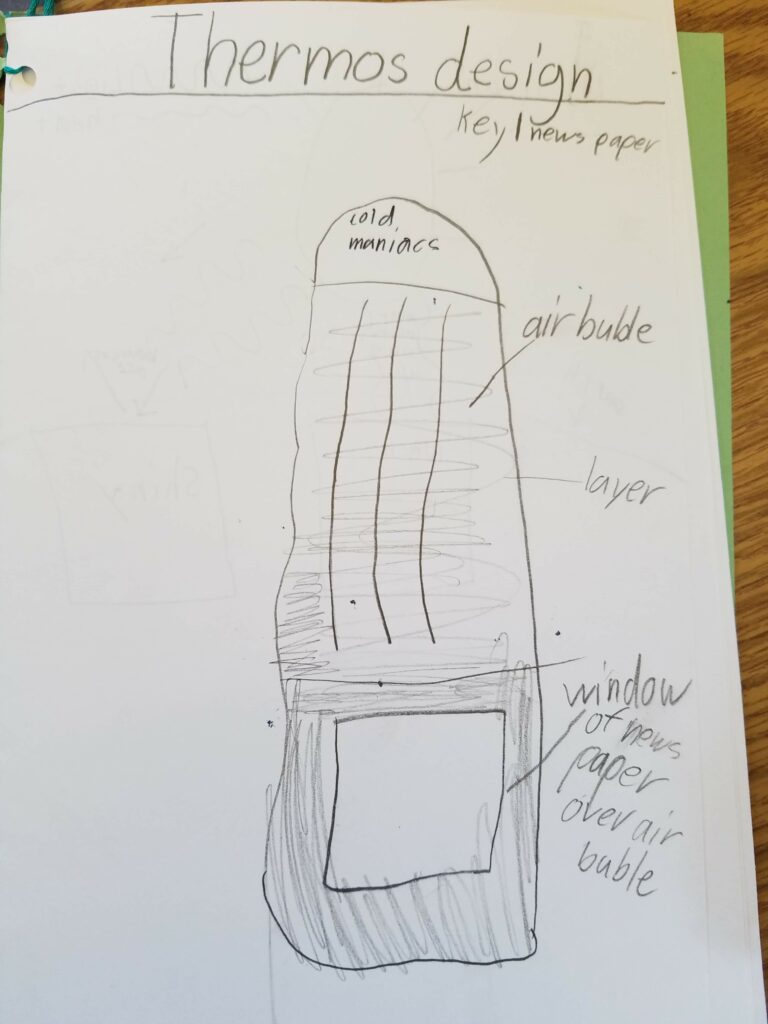
Gravenstein 4th grade students designed and built thermoses with plastic bottles, newspaper and tape. Each class was competing for 1st place, the winner having the coldest thermos. “The Freezer” won, having the largest ice cube after 75 minutes at .3g.
I’ve done a similar competition with high school students, who designed and built houses out of cardboard. We placed a temperature sensor/logger inside them on a hot day, and the coolest house won.
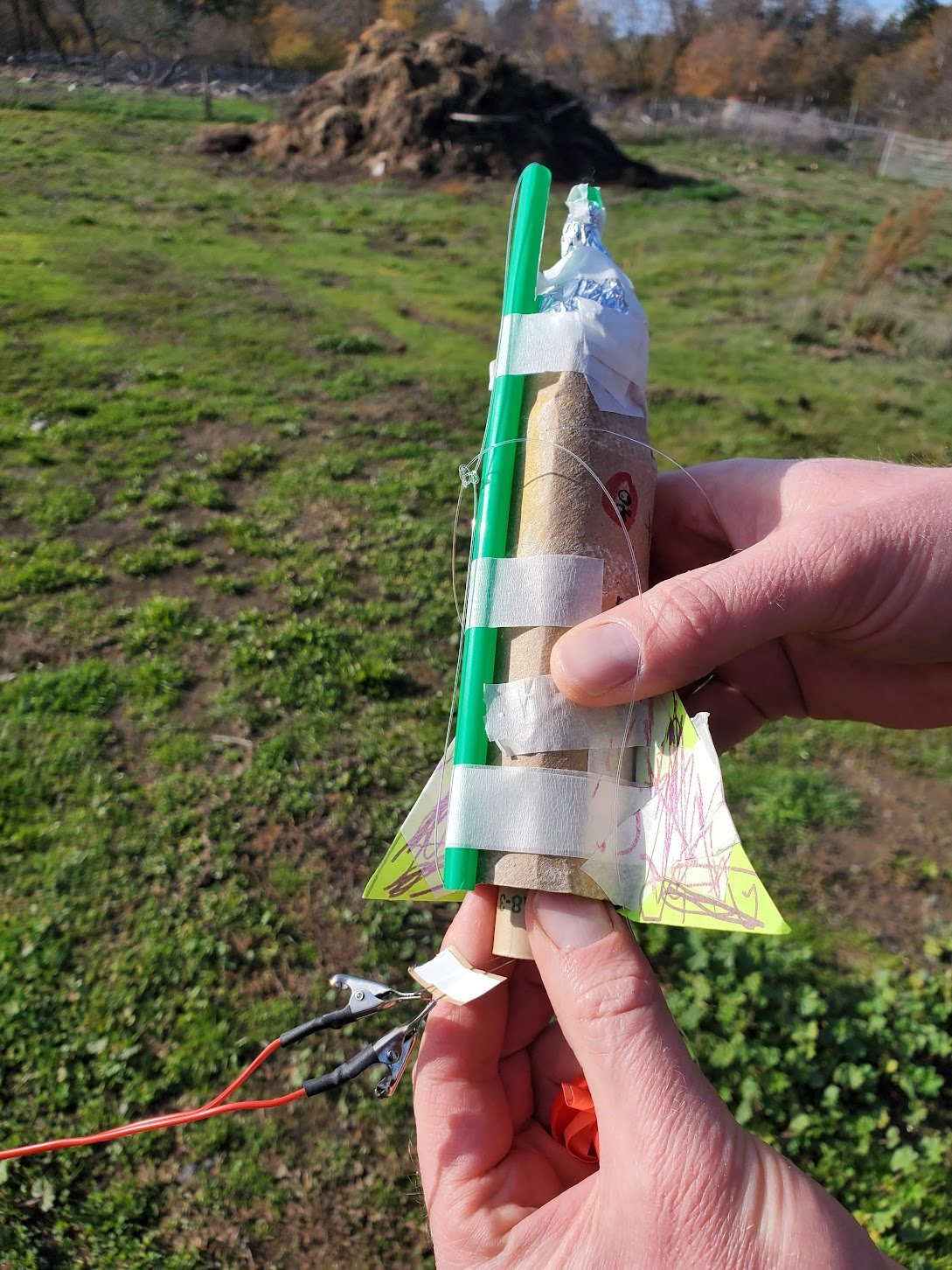
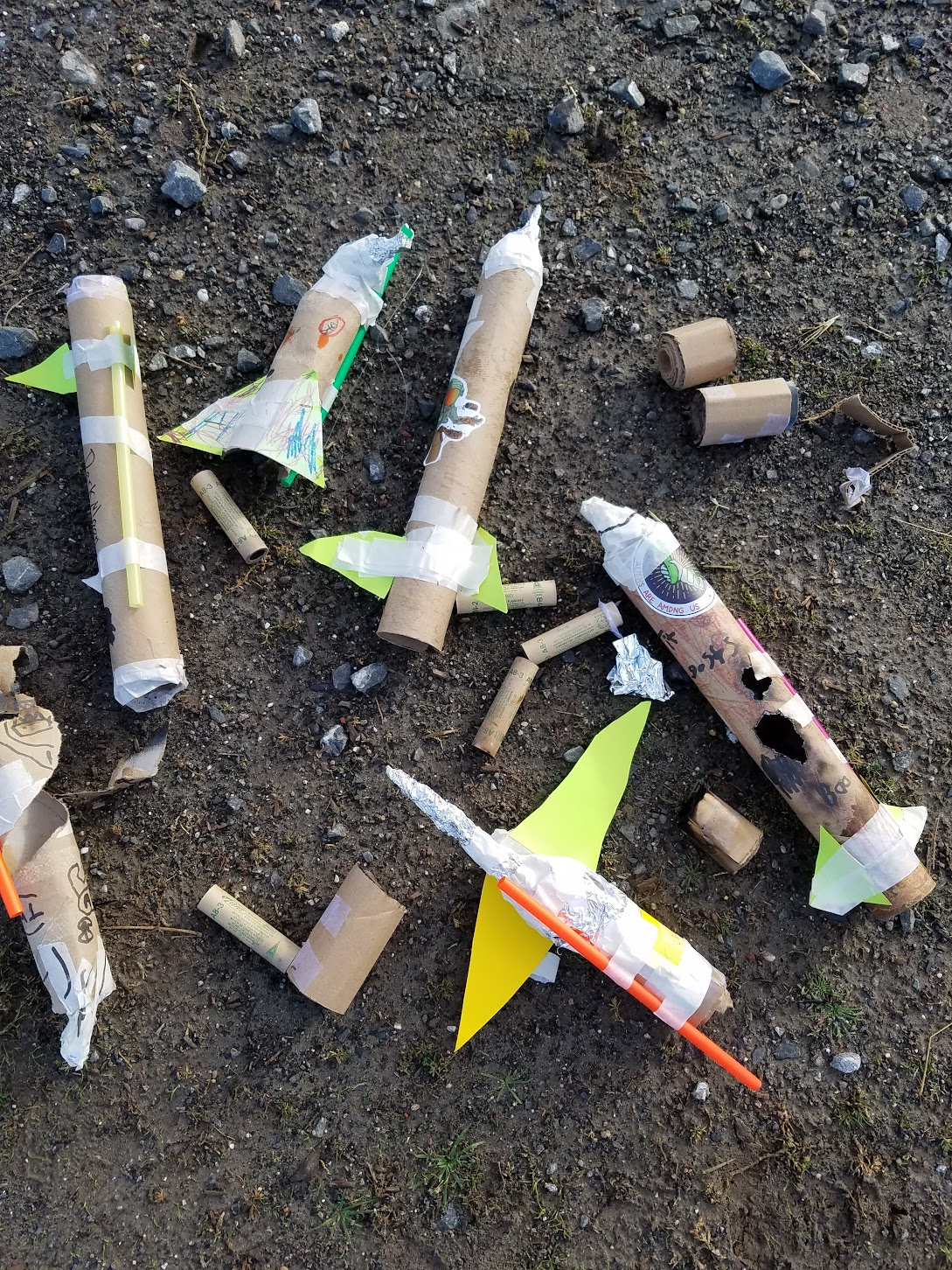
Gravenstein first and second graders built rockets using paper towel rolls, tape, card stock and foil. I went to Jake’s Performance Hobbies in Rohnert Park and got some model rocket engines and a launcher, plus great advice. After making a cardboard sleeve to hold the engine, we launched them at my sister’s farm and were amazed by how well they flew.
Installing the rocket engine.Rockets, after flight, with spent engines.
Film canisters: Must have a rubber seal, which many sold by Amazon do not. Shutterbug in Santa Rosa said they have a ton of film canisters that work for rockets and they would be happy to give them to Gravenstein parents for free: https://shutterbugcamerashops.com/contact-us
Alka seltzer: drugstore generic brand also works fine.
Directions: Fill the film canister halfway with water. Add one alka seltzer tablet, close the lid tightly, shake, put the canister on the ground upside down and stand back.
We talked about Newton’s Third Law and how the carbon dioxide produced in the canister builds up until it causes the canister to burst open. The gas pushes down on the ground and the ground pushes the rocket into the air- every action has an equal and opposite reaction.
Mealworms:Students have been learning about the mealworm lifecycle. Mealworms eat almost anything that used to be alive. Food scraps, leaves, flour, dogfood, etc. Students are taking home mini terrariums with soil and mealworms. Eventually they will turn in to pupas, and then beetles. Fried mealworms are a delicacy in some cultures. Mealworms can be purchased at Sebastopol Hardware, or any pet shop.
Mealworms don’t need water, but they do need some moisture. Small amounts of fruit will work. I put my mealworms in a plastic container full of oatmeal and a piece of pear. This variety of mealworm (king) cannot hibernate, so the mealworms need to remain around room temperature.
Our first Build Hack Make summer camp at the Chimera makerspace was a huge success. Students built fan cars, synthesizers, strobascopes, keyboards and a robotic finger. Looking forward to adding 3D printed rockets to the next summer’s camp.