Wild Spring Salad

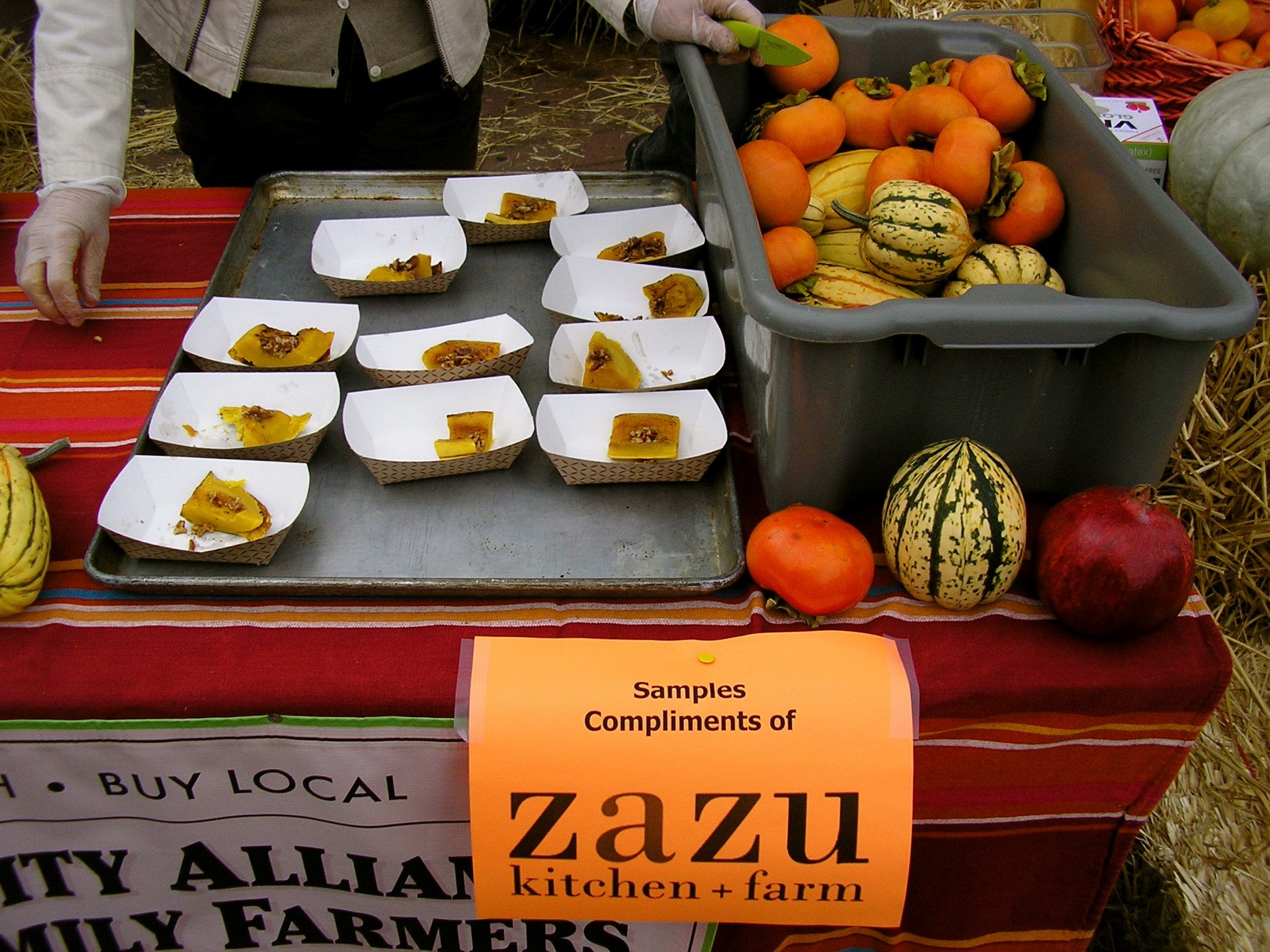
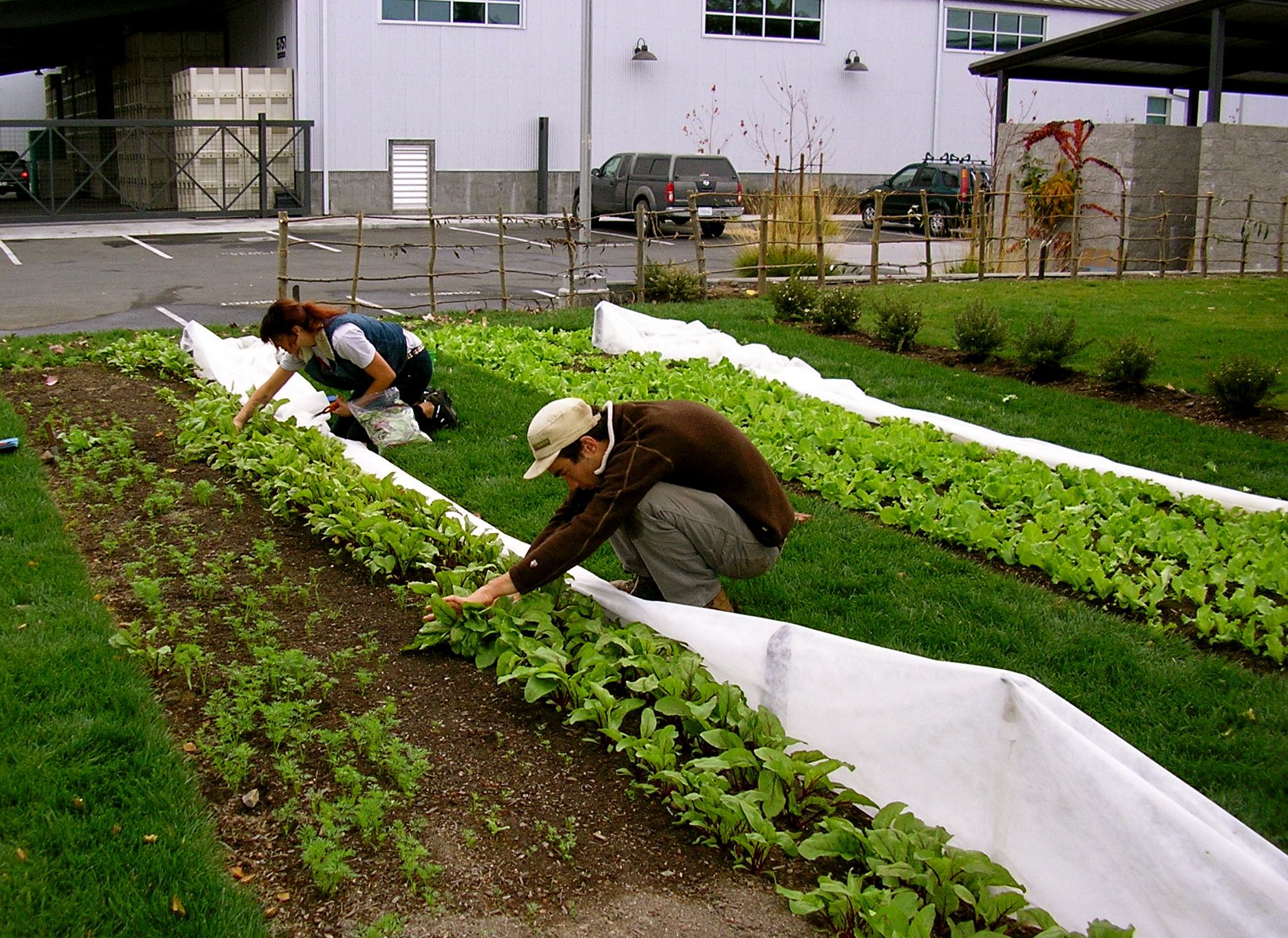
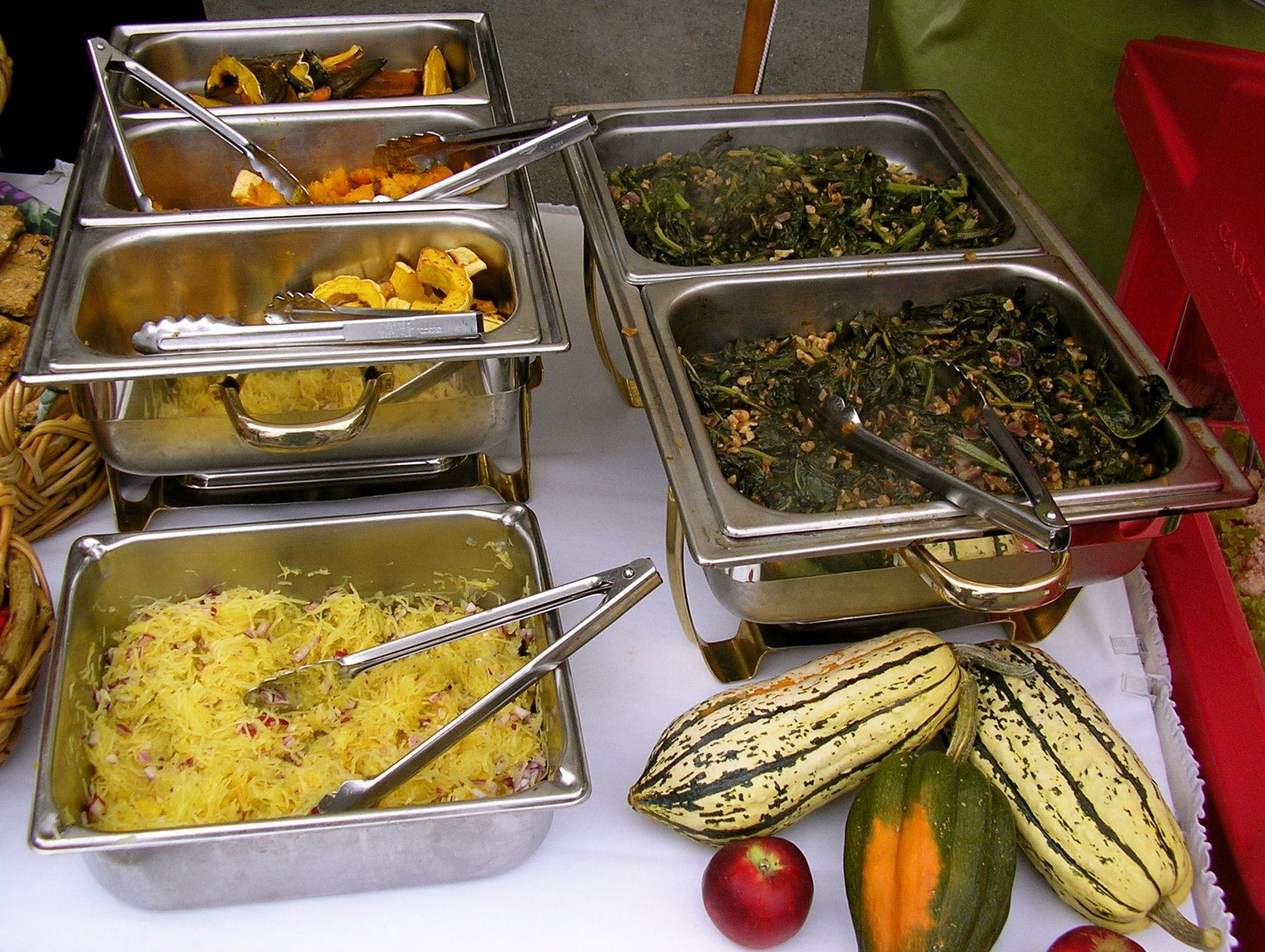
Les Goodman (sous chef at John Ash) and I presented a miner’s lettuce, arugula, pickled beet and raw milk ricotta salad at USF’s Farmer-Chef luncheon. My sister Sarah and I picked 8.6lbs of miner’s lettuce the day before, mostly at Luther Burbank’s original experimental farm, along with a pound of arugula I grew at zazu farm. We talked farming and food with incredible chefs and farmers like Mark Dommen of One Market and Andy Griffin from Mariquita Farm. Les took the leftover salad back to John Ash and added it to the menu, where it promptly sold out. It’s easy to make fun of a plant that is so ubiquitous that many consider it a weed, but you can’t find it in stores, it is chocked full of omega 3′s, and it’s delicious.

We served 240 attendees of the USF hospitality management symposium. Lots of people had never heard of miners lettuce, or Claytonia, as it is know on the East Coast where it is grown as a greenhouse crop. It is one of the hardiest winter greens and it is also chocked full of Omega-3 fatty acids.

Posted in Content | Leave a comment

The Eggstream

300 chickens leap out of the Eggstream onto fresh pasture. They are eager to eat the grass and dig for worms.

Marc Felton and I helped move Silva Star Farm’s Eggstream trailer from Rose and Thorn to the apple orchard at Rancho Pillow. We will leave the chickens in the orchard for about two weeks, and then move them into another pasture. Sarah Silva will be tending this flock and selling the eggs to Bill’s Farm Basket, Andy’s and her chicken CSA. Learn more at Silva Star Farms.

Sarah using the tractor to move the Eggstream from the apple orchard to the forest at Rancho Pillow.

Posted in Content | Leave a comment

Nature’s Aerators

Heirloom hogs eagerly root up the soil at John and Duskie's farm in Forestville.

I was about to mow a fallow pasture at Macbryde Farm, when I noticed that the soil had been compacted by years of livestock grazing. John and I decided to let the hogs in to root it up instead of mowing. They immediately started turning over the sod, looking for worms and other food sources. This turning of the soil will reduce runoff and allow us to grade and re-seed the pasture. Each day, these hogs eat expired produce from Bovolo like fennel and melons, and should be succulent when they are harvested in about a month.

Duskie and John won first place last weekend at Cochon555 Napa. “Cochon 555 is a one-of-a-kind traveling culinary competition and tasting event–five chefs, five pigs, five wine makers–to promote sustainable farming of heritage breed pigs.” They prepared an entire hog with dishes like Pigs Head Cowboy Beans, Pig Heart Pork Bun, and Bacon Waffles.

Posted in Content | 1 Comment

Micro Mustard

Mustard sprouts pop up in front of zazu.

I planted a cover crop of mustard and fava beans at zazu. These fast growing plants provide beauty, food and fertility. They also crowd out weeds and help to control pests like nematodes. Right now, the zazu kitchen staff is harvesting these spicy mustard sprouts and adding them to salads and other dishes. In March the Fava Beans will start getting ripe, and the mustard will explode with bright yellow blooms. Mustard is cheap and easy to grow throughout the rainy season.

Posted in Content | Leave a comment

The Bale Grist Mill

The Bale Grist Mill's water wheel in action on a rainy winter day.

My family and I visited the Bale Grist Mill near Calistoga today. After doing extensive research on an organic grain production project in Oregon, I was fascinated to learn about Northern Califoria’s history of grain growing and milling. In the mid 1800′s the Napa Valley was a prosperous grain growing region, and the Bale Grist Mill was its hub. Much of the grain grown in Sonoma County was millled at the Bale Mill, due to its efficiency. Founded in the 1840′s by an unsavory doctor from England, who married General Vallejo’s niece, the Mill only became profitable after Dr. Bale died and his wife took over. She hired millwrights that rebuilt the mill in the 1850′s with the help of The Young Mill-wright and Millers’ Guide written by inventor Oliver Evans in 1795. This book detailed Evans’ invention of a fully automated, water powered grist mill, an innovation that laid the ground work for the industrial revolution.

Posted in Content | 1 Comment

Market Gardens at Felton Acres

Zazu Farm has teamed up with Felton Acres and will now be managing their 3 market gardens. The produce will supply zazu, the zazu farmstand, the Felton family, and their employees. Marc Felton has decided to focus on raising chickens, turkeys, goats and hogs. Inspired by the Joel Salatin and the Omnivore’s Dilemma, Marc left a career at Google to start a diversified farm.

Marc Felton moving one of the chicken tractors that he designs and builds. His farm is on an old Gravenstein apple orchard.

Posted in Content | Leave a comment

Food Hubs

I spent two weeks in December studying food aggregation efforts in Oregon. I met with farmers, toured distribution warehouses, and interviewed chefs and other food buyers. The most interesting and effective example of aggregation I found is the Southern Willamette Valley Bean and Grain Project. This project was spearheaded by the Ten Rivers Food Web. Two local farmers teamed up with the project and raised the money to build mills on their properties. The Bean and Grain Project hosted an event called “Fill Your Pantry”, where consumers could buy beans and grains direct from the farmers. The event was a huge success, but some of the larger farms had trouble handling a large volume of retail sales. This sort of one time market could be sponsored by an organization like Sonoma County Farmtrails, and feature products that can last in a pantry like pickles, beans, and winter squash.

Hummingbird wholesale is a medium sized distribution company in Eugene. Co-founder Julie Tilt has worked with the Bean and Grain Project since the beginning. With and average of 20% growth a year they have out grown 2 locations in 7 years and are about to move into a third. They use bicycles to deliver much of their produce.

James Henderson in front of Hummingbird Wholesale with some locally grown beans and grains. James is an OSU trained farming expert and part of his job at Hummingbird is to find more farmers to grow beans and grains in the Willamette Valley.

Posted in Content | Leave a comment

Farmer’s Brunch

My sisters and I hosted the 3rd Farmer’s Brunch at zazu today. The topic of the meeting was the Farm to Institution initiative being sponsored by the Sonoma County Health Department. We welcomed the directors of Santa Rosa City Schools food program, Memorial Hospital Food Program, and their food buyers. Farmer’s in attendance were both large and small, from Gourmet Mushrooms to Silva Star Farms. We also welcomed founding members of the Spiral Foods Co Op, Jana Hill from the Health Department, and Heidi Herman from the California Alliance for Family Farms.

Clockwise from left: Sarah Mitchel, Meg Hill from Gourmet Mushrooms, Sarah Silva of Silva Star Farms, Linda Hansen and Nick Gaddini from Memorial Hospital discuss distribution issues.

We feasted on Turkey from Felton Acres, Canvas Ranch chard, and stuffing with ingredients from Strong Arm Farm. All of the ingredients and labor were donated by the members of the North Coast Farmer’s Collective, which puts on the brunch. Chef Tara created the meal from what the farmers had available, then Casey and my sisters, Sarah and Elena, helped her prepare it.

I was dismayed by the fact that we had 9 food buyers show up and only 8 farmers. Most of the farmer’s I talk to are focused on selling direct to the consumer, because they can make the most profit. These consumers tend to be upper-middle class, and they occupy a relatively small slice of society. Currently there are lots of small farmers competing for this small segment of the market. Farmer’s Markets are innudated with high-priced produce, meanwhile the directors of local school and hospital programs can’t find one farmer willing to contract with them. In my mind, the wealthy consumer is low hanging fruit, and farmers may have to increase the scale of their operations to find other outlets for their produce. Finding wholesale outlets will end up saving them a ton of work on the retail end. Farmers, I implore you, let’s work together to scale up and bring fresh local produce into the schools and hospitals, to the sick and underpriviledged who need it most.

Posted in Content | 1 Comment

A Stark Contrast: The Salinas Valley and Pinnacles National Monument

Armando next to a onion digging tractor implement. This machine digs the onions up and deposits them on top of the soil. They are allowed to dry and then another machine comes along to pick them up and conveyor them into a truck. They are then trucked to a facility that packs them.

Still making my way back from Arizona, I decided to make a side trip to Pinnacles National Monument. On my way there I stopped to photograph some of the lush fields of vegetables in the Salinas Valley. In a massive field of onions I met Armando, who told me about how he farms.

Unlike the onions, this cauliflower is cleaned and boxed right in the field. The efficiency of this mobile packing operation is impressive.

The Salinas valley is intensively farmed, and produces a massive amount of food, but this level of industrial production requires an obscene amount of fossil fuel inputs in the form of pesticides and fertilizer. This method of farming also depletes the soil, and causes erosion, so that more and more inputs are required for the same yield. I believe it is time for us, as a society, to re-evaluate agricultural inputs. We have so much to learn from nature. At Seed School, renown permaculture pioneer and former Harvard geneticist Toby Hemenway gave a lecture on this topic. Read his lectures here.

When I arrived at the Pinnacles I was struck by a lush chaparral plant community, thriving in steep rocky soil, nearly devoid of nutrients. The landscape is dominated by chamise, buckwheat, ceanothus and digger pine. Chamise, a heather-like plant, actually relies on fire to propagate itself. These same chaparral plants also thrive in Sonoma County; from the slopes of St Helena to Gunsight Rock.

A ray of sunlight illuminates the Pinnacles, flanked by digger pine and chamise.

For further reading about the Salinas Valley, check out East of Eden by John Steinbeck. Considered by Steinbeck to be his best work, East of Eden captures the beauty and the sadness of the Salinas Valley in an epic story about farming, family, and morality.

Posted in backcountry botany, Content, vegetables | 1 Comment

Stranded in 29 Palms

Sunrise over the Morongo Valley.

My clutch went out just as I entered 29 Palms today, so I’m stuck here until I can get it replaced. Luckily, there is beautiful desert hiking surrounding this town, which is the main outpost for the largest US Marine base in the world. When camping in nearby Joshua Tree, you can hear loud booms at night from the base, where they do a lot of training for missions in Iraq and Afganistan. Just last week a battalion headed from 29 Palms to Helmand province in Afganistan. While my truck was being fixed I met a woman who grew up in the area and lives in a ghost town. She told me stories about her father, a prospector, and her grandmother, a Cherokee Indian whose family came to California on the Trail of Tears. She told me that when she was a child some landowners would spread wildflower seed on the valleys by airplane before a rain, and she recounted fields of waist-high blue flowers. This region once possessed rich natural resources (rivers, minerals, rich soil), but after centuries of exploitation, only a poverty stricken skeleton of past abundance remains. Many of the marines coming back from the wars in the Middle East are jobless and destitute, some live on the streets of 29 Palms. The town is also a food desert, with fast food joints dominating the culinary landscape, and very little fresh food available.

Golden Cholla and Pencil Cholla populate this wash I hiked up this afternoon. In the background are lots of creosote bushes and the foothills of Joshua National Park.

Posted in Content | Leave a comment